Artemis II lance avec succès la première mission habitée américaine vers la Lune depuis Apollo

La mission Artemis II de la NASA a décollé avec succès le 1er avril 2026 depuis le centre spatial Kennedy en Floride à 18h35 heure locale, marquant le premier vol habité américain vers la Lune depuis Apollo 17 en 1972. La fusée Space Launch System a propulsé la capsule Orion avec quatre astronautes à bord : le commandant Reid Wiseman, le pilote Victor Glover, la spécialiste Christina Koch et Jeremy Hansen de l’Agence spatiale canadienne.

Le décollage s’est déroulé sans incidents majeurs, hormis un avertissement de température sur une batterie du système d’éjection d’urgence d’Orion, considéré comme un problème de capteur. Les propulseurs et l’étage central se sont séparés à l’heure, et les panneaux solaires d’Orion se sont déployés nominalement.

Cette mission de 10 jours teste les systèmes d’Orion en conditions réelles. Après une orbite terrestre initiale d’une journée pour vérifications, une mise à feu trans-lunaire le jour 2 dirigera le vaisseau vers la Lune. Orion entrera dans sa sphère d’influence le jour 5, effectuant son passage le plus proche les 4 000 à 6 000 miles de la surface le jour 6, avec photographies et observations par l’équipage, avant le retour et l’éclaboussure dans le Pacifique le jour 10.

Le calendrier Artemis a évolué : Artemis III, prévue en 2027, testera en orbite terrestre basse le rendez-vous avec des atterrisseurs commerciaux. Artemis IV visera le premier alunissage en 2028, suivi de missions annuelles vers une présence soutenue lunaire. Jared Isaacman, administrateur NASA, a qualifié Artemis II d’acte d’ouverture préparant une ère de découvertes scientifiques.

Artemis II: Premier Vol Habité d’Orion vers la Lune depuis 1972

Le vaisseau spatial Orion, construit par Lockheed Martin, a décollé à bord de la fusée Space Launch System (SLS) depuis le Centre spatial Kennedy en Floride le 1er avril 2026 à 18h35 EDT (22h35 GMT). Ce lancement marque le début de la mission Artemis II, premier vol habité de NASA vers la Lune depuis Apollo 17 en 1972.

Quatre astronautes composent l’équipage: le commandant Reid Wiseman (50 ans), le pilote Victor Glover (49 ans), la spécialiste de mission Christina Koch (47 ans) et le spécialiste de mission Jeremy Hansen (50 ans) de l’Agence spatiale canadienne. La mission de 10 jours suit une trajectoire de retour libre autour de la Lune, à environ 393 000 kilomètres de la Terre.

Après le décollage de la plateforme de lancement 39B, Orion a atteint l’orbite terrestre. Environ trois heures et demie plus tard, Victor Glover a pris les commandes manuelles pour des opérations de proximité avec l’étage supérieur ICPS de la SLS, séparé précédemment. Ces manœuvres testent les systèmes de propulsion d’Orion et sa capacité à opérer près d’autres objets spatiaux, en vue de futures interfaces avec des atterrisseurs lunaires.

La phase initiale inclut une orbite terrestre d’une journée pour vérifier les systèmes, suivie d’une mise en route vers la Lune via des brûlures de perigée et d’apogée. Artemis II valide les systèmes de support vital d’Orion avec équipage et prépare les missions ultérieures du programme Artemis.

Le lancement s’est déroulé sans incident majeur, malgré de légers problèmes de batteries et de portée résolus au sol.

Danantara, SMBC et Mandiri IM lancent le premier fonds de leasing aéronautique d’Indonésie avec 800 millions USD

PT Danantara Investment Management (DIM), SMBC Aviation Capital et Mandiri Investment Management ont annoncé un protocole d’accord pour créer le Mandiri Aviation Leasing Fund, première plateforme indonésienne de leasing aéronautique dotée d’un portefeuille initial d’environ 800 millions USD, soit 13,53 billions de roupies au cours de 16 916 IDR/USD.

Ce partenariat positionne l’Indonésie dans l’écosystème mondial du financement aéronautique. Pandu Sjahrir, directeur des investissements de Danantara, a qualifié cette initiative d’étape importante pour la participation du pays à ce secteur. SMBC Aviation Capital fournira les services opérationnels et de gestion du leasing d’avions, tout en développant des capacités à long terme en Indonésie.

Danantara, fonds souverain lancé en février 2024 et gérant plus de 900 milliards USD d’actifs, accélère ses déploiements avec 12 milliards USD prévus en 2025, complétés par 5 milliards USD de dividendes annuels des entreprises d’État. Ses investissements prioritaires incluent santé, énergie et renouvelables. Récemment, Danantara a accordé un prêt de 405 millions USD à Garuda Indonesia, renforçant son engagement dans l’aviation.

Ce fonds s’inscrit dans une dynamique sectorielle : l’Indonésie modernise sa flotte avec 42 Rafale (contrat de 8,1 milliards USD) et 12 PC-24 Pilatus pour formation et missions dans ses 17 000 îles.

CDB Aviation livre le premier des deux Airbus A321neo à Icelandair

Reykjavik, Islande – 1er avril 2026 – CDB Aviation, filiale irlandaise à 100 % de China Development Bank Financial Leasing Co., Limited, a annoncé la livraison du premier des deux Airbus A321LR neufs à Icelandair (ICE : ICEAIR). Cette opération avance la stratégie de renouvellement de flotte du transporteur islandais.

Les accords de location à long terme pour ces deux A321LR ont été signés en janvier 2024. Le premier appareil a été livré en mars 2026, le second devant suivre prochainement. Ces avions s’inscrivent dans un plan plus large visant à remplacer les Boeing 757, piliers de la flotte d’Icelandair depuis des décennies.

Historiquement fidèle à Boeing, Icelandair diversifie sa flotte avec Airbus. En juillet 2023, elle a commandé 13 A321XLR, dont les livraisons débuteront en 2029, et sécurisé des leases pour cinq A321LR supplémentaires, dont les premiers ont rejoint la flotte fin 2024 via SMBC Aviation Capital. Les deux units de CDB Aviation portent à sept le nombre total d’A321LR attendus.

Équipés de moteurs Pratt & Whitney GTF, ces A321LR offrent un rayon d’action de 4 000 milles nautiques (7 400 km), adapté aux routes transatlantiques via l’hub de Keflavik. Configurés pour 187 passagers (22 en Saga Premium, 165 en économique), ils intègrent des sièges Comoda de Geven avec 1,09 m d’espace pour les jambes en affaires, amélioration par rapport aux 1,01 m actuels, sans full flat.

Cette transition renforce l’efficacité opérationnelle d’Icelandair, réduisant la consommation de kérosène et le bruit par rapport aux 757.

Airbus Skywise subsidiary: fusion de Navblue et solutions digitales pour transformation aviation

Airbus a annoncé le 1er avril 2026 la création de sa filiale Skywise, résultant de la fusion de sa filiale spécialiste des opérations de vol Navblue et de ses solutions digitales Skywise. Cette entité, détenue à 100% par Airbus et basée à Toulouse en France, emploie environ 750 personnes réparties dans des bureaux au Canada, en Chine, France, Inde, Pologne, Singapour, Thaïlande, Royaume-Uni et États-Unis, avec des représentants dans d’autres pays.

Skywise se positionne comme le premier fournisseur de solutions digitales intégrées de bout en bout pour les exploitants d’avions, couvrant la planification et le contrôle des opérations, les opérations de vol, techniques et au sol. Elle combine l’expertise du constructeur aéronautique et les compétences digitales pour transformer la complexité opérationnelle en performances prévisibles et rentables, garantissant des opérations résilientes et durables.

Navblue apporte son héritage dans les solutions digitales aidant pilotes, dispatchers et équipes d’opérations de vol à planifier, exécuter et optimiser les vols en toute sécurité et efficacité. Skywise, lancée en 2017, a révolutionné la gestion des données aéronautiques avec près de 12 000 avions connectés. Cette intégration unifie trois domaines historiquement fragmentés : opérations de vol, maintenance prédictive des flottes et gestion des ressources au sol pour des rotations à l’heure.

Airbus accélère ainsi la transformation numérique du secteur aéronautique, fournissant des solutions interopérables pour tous types d’appareils.

Skywise: Airbus redéfinit le ciel numérique avec Navblue

Airbus accélère sa transformation numérique en lançant Skywise, une filiale à 100% regroupant les solutions digitales Skywise et Navblue en une entité unique. Annoncée le 1er avril 2026 à Toulouse, cette initiative vise à répondre aux besoins évolutifs des clients dans un environnement en rapide mutation, en intégrant fluidement les opérations de vol, techniques et au sol pour les flottes Airbus et non-Airbus.

Skywise fusionne l’expertise du constructeur aéronautique et le savoir-faire digital pour transformer la complexité opérationnelle en performances prévisibles et rentables. Dans les opérations de vol, elle s’appuie sur l’héritage de Navblue pour une gestion en temps réel et centrée sur l’avion. Les opérations techniques convertissent les données complexes en maintenance prédictive, permettant aux équipes d’ingénierie de maintenir les flottes en service. Les opérations au sol optimisent la synchronisation critique du turnaround, incluant carburant, bagages et mouvements d’avions.

Plateforme ouverte et sécurisée dans le cloud, Skywise agrège et anonymise des données de multiples sources industrielles, offrant un accès unifié à l’entrepôt de données, la visualisation, les alertes et les outils d’apprentissage automatique. Plus de 90 compagnies aériennes l’utilisent pour améliorer la prise de décision, l’efficacité opérationnelle et réduire les coûts. Des partenariats avec FPT Software renforcent l’écosystème en Asie via des API pour tiers, des applications et des formations. TCS, partenaire certifié, développe des solutions analytiques scalables pour l’aviation mondiale.

Skywise intègre également la planification et le contrôle des opérations, favorisant une excellence opérationnelle résiliente et durable.

RTX BBN Technologies lance Maude-HCS, outil open-source pour valider les réseaux cyber covert

RTX’s BBN Technologies a lancé Maude-HCS, un toolkit open-source financé par DARPA dans le cadre du programme PWND2, permettant aux équipes de cyberdéfense de modéliser, tester et valider les réseaux de communication covert. Annoncé le 1er avril 2026 depuis Cambridge, Massachusetts, cet outil est disponible sur GitHub et un preprint sur arXiv.

Les systèmes de communication cachés (HCS) intègrent des messages covert dans un trafic réseau ordinaire pour masquer leur présence. Maude-HCS formalise l’indétectabilité comme l’indistinguabilité statistique des traces d’exécution observables entre un système baseline sans communication cachée et un déploiement HCS. Il génère des échantillons Monte Carlo des distributions de traces pour estimer les taux de vrais et faux positifs, fournissant des bornes inférieures sur des mesures comme la divergence KL.

Le toolkit réduit les temps de validation de semaines à heures, avec une erreur de 1% à 9% par rapport aux déploiements contrôlés, et une scalabilité linéaire sur un serveur huit cœurs. Les concepteurs spécifient le comportement des protocoles, les observables des adversaires et les hypothèses environnementales pour évaluer les compromis indétectabilité-performance.

“Maude-HCS fournit aux utilisateurs un moyen rigoureux mais pratique de valider les garanties performance-confidentialité des designs de communication cachés avant tout contact avec le réseau”, déclare Dr. Joud Khoury, investigateur principal chez RTX BBN Technologies. “Cette capacité pourrait changer fondamentalement la manière dont la communauté de sécurité nationale construit et valide les canaux de communication covert.”

Maude-HCS valide les prédictions modèles contre des mesures de bancs d’essai physiques, quantifiant l’impact de la configuration protocole, du trafic de fond et des pertes réseau sur l’indétectabilité pour des adversaires passifs observant timing et statistiques de trafic.

PIA reprend ses vols vers Heathrow après six ans d’interruption

Pakistan International Airlines (PIA) a repris ses vols directs vers l’aéroport de Heathrow à Londres, marquant son retour dans la capitale britannique après une suspension de six ans. Ce rétablissement restaure un lien aérien clé entre le Pakistan et le Royaume-Uni.

Le lancement a débuté dimanche avec le vol PK-785 en provenance d’Islamabad, parti à 13h19 (heure locale du Pakistan) et affichant complet face à une forte demande. PIA opérera désormais trois vols hebdomadaires depuis Islamabad et un depuis Lahore vers Heathrow.

Le ministre de la Défense, Khawaja Asif, avait confirmé plus tôt la reprise des liaisons directes d’Islamabad le 29 mars et de Lahore le 30 mars. Cette autorisation fait suite à l’obtention officielle en septembre dernier, après près de cinq ans d’arrêt, permettant à PIA de relancer d’abord ses opérations vers Manchester, puis Birmingham, et enfin Londres.

Ces vols offrent aux passagers des trajets plus rapides et pratiques entre les deux pays, renforçant les connexions UK-Pakistan.

Willis Lease Finance Corporation finalise deux accords JOLCO supplémentaires pour près de 150 millions de dollars

Willis Lease Finance Corporation (NASDAQ: WLFC), leader dans la location d’avions commerciaux et fournisseur mondial de services aéronautiques, a annoncé la clôture de deux transactions JOLCO (Japanese Operating Lease with Call Option) totalisant environ 50 millions de dollars de financement. Les deux opérations ont été finalisées en mars 2026, portant le financement JOLCO total de WLFC à près de 150 millions de dollars.

Ces financements soutiennent des moteurs LEAP-1A et LEAP-1B. WLFC consolide ainsi sa position dans le financement d’équipements aéronautiques via des structures JOLCO, en partenariat avec des investisseurs japonais.

L’annonce intervient dans un contexte de résultats solides pour WLFC, avec un chiffre d’affaires de 730,2 millions de dollars en 2025, en hausse de 28,3 % par rapport à 2024. La société continue d’élargir son portefeuille de moteurs et services aviation.

Pentagone signe un accord de sept ans avec Boeing pour tripler la production des capteurs PAC-3

Le Pentagone a signé un accord-cadre de sept ans avec Boeing pour tripler la production des capteurs destinés aux missiles Patriot Advanced Capability-3 Missile Segment Enhancement (PAC-3 MSE). Cette initiative reflète un virage stratégique dans la gestion des acquisitions de défense, en engageant directement Boeing, fournisseur clé de sous-systèmes, sans passer par Lockheed Martin, maître d’œuvre principal du PAC-3 MSE.

Parallèlement, un accord distinct avec Lockheed Martin vise à plus que tripler la production des missiles complets. Cette approche s’inscrit dans la nouvelle stratégie d’acquisition du Pentagone, qui privilégie des signaux de demande à long terme pour les fournisseurs de niveau inférieur, favorisant leurs investissements en capacité. « Pour bâtir un véritable Arsenal de la Liberté, nous devons renforcer chaque maillon de la chaîne », a déclaré Michael Duffey, sous-secrétaire à l’Acquisition et au Maintien en Service.

Boeing fabrique ces capteurs, responsables de la guidage actif des interceptions, dans son usine de Huntsville, Alabama. L’entreprise a investi plus de 200 millions de dollars depuis 2024 pour étendre ses installations de 35 000 pieds carrés, avec une croissance des livraisons de plus de 30 % en 2025. L’accord permettra des investissements supplémentaires sans apport de trésorerie.

À la Paris Air Show en juin 2025, Lockheed Martin avait identifié le sous-système capteur de Boeing comme principal goulet d’étranglement pour atteindre 650 missiles par an d’ici 2027. Boeing a depuis dépassé la consommation des lignes d’assemblage de Camden (Arkansas) et Okinawa (Japon). Un contrat pluriannuel formel est prévu fin 2026, avec une montée en cadence immédiate.

L’urgence est dictée par l’opération Epic Fury : plus de 1 800 intercepteurs Patriot ont été tirés en 16 jours, dont au moins 1 285 PAC-3 par les partenaires du Golfe, contre 600 produits par Lockheed en 2025. Atteindre 2 000 par an prendra sept ans.

Pentagone signe un accord de sept ans avec Boeing pour tripler la production de seekers PAC-3

Le Pentagone a signé un accord-cadre de sept ans avec Boeing pour tripler la production de seekers destinés au missile Patriot Advanced Capability-3 Missile Segment Enhancement (PAC-3 MSE). Cette décision marque un virage dans la gestion des achats de défense, en engageant directement Boeing, sous-traitant clé, sans passer par Lockheed Martin, maître d’œuvre principal du PAC-3 MSE.

Parallèlement, un accord distinct avec Lockheed Martin vise à plus que tripler la production des missiles complets PAC-3 MSE. Cette approche s’inscrit dans la nouvelle stratégie d’acquisition du Pentagone, qui privilégie des signaux de demande à long terme pour les fournisseurs de niveau inférieur, favorisant ainsi les investissements en capacité. « Pour bâtir un véritable Arsenal de la Liberté, nous devons renforcer chaque maillon de la chaîne », a déclaré Michael Duffey, sous-secrétaire à l’Acquisition et au Maintien en Service. « Nous dépassons l’ancien modèle pour forger des partenariats directs avec les fournisseurs critiques. »

Boeing fabrique ces seekers, composants assurant la guidage actif, dans son usine de Huntsville, Alabama. L’entreprise a investi plus de 200 millions de dollars depuis 2024 pour étendre ses installations de 35 000 pieds carrés, avec une croissance des livraisons de plus de 30 % en 2025. Au Salon du Bourget en juin 2025, Lockheed Martin avait identifié ce sous-système comme principal goulet d’étranglement pour atteindre 650 missiles par an d’ici 2027.

La montée en cadence débutera immédiatement, avec un contrat pluriannuel formel prévu fin 2026. Cette urgence répond à une consommation élevée, comme lors de l’opération Epic Fury où plus de 1 800 intercepteurs Patriot ont été tirés en 16 jours, dépassant la production de 600 PAC-3 MSE en 2025.

LATAM Airlines First South American Carrier to Launch Wi-Fi on Long-Haul Boeing 787-9 Flights

LATAM Airlines completed its inaugural long-haul flight with internet connectivity on a Boeing 787-9, marking the first such service by a South American carrier. According to Chilean aviation news site El Aéreo, the debut occurred on the Madrid (MAD) to São Paulo (GRU) route.

The airline has allocated $60 million to equip 60 widebody aircraft with satellite-based Wi-Fi from ViaSat between 2026 and 2028. This initiative complements the existing LATAM Play seatback inflight entertainment system and forms part of a broader widebody fleet upgrade, including redesigned business and economy cabins on Boeing 787s, new premium economy seating, refreshed menus, and amenity kits.

Initial rollout offers free real-time messaging. Future phases will add web browsing and work applications for LATAM Pass loyalty program members. Nearly the entire narrowbody fleet already features Wi-Fi as of March 2026, with over 8 million passengers using the service on short- and medium-haul routes like Santiago-Fortaleza and Lima-La Havane.

ViaSat’s Amara technology combines geostationary (GEO) and low-Earth orbit (LEO) satellites for high-speed, low-latency connectivity, covering remote areas such as the Pacific South. Deployment targets key long-haul routes including Santiago-Sydney, Lima-Madrid, and São Paulo-London, positioning LATAM as a leader in regional passenger experience enhancements.

Pentagon Signs Seven-Year Boeing Deal to Triple PAC-3 Seeker Production Amid Supply Shortfalls

The Pentagon has signed a seven-year framework agreement with Boeing to triple production of seekers for the Patriot Advanced Capability-3 Missile Segment Enhancement (PAC-3 MSE), bypassing prime contractor Lockheed Martin in a direct supplier engagement.

This parallel deal accompanies a concurrent agreement with Lockheed Martin to more than triple PAC-3 MSE all-up round output. The approach implements the Pentagon’s Acquisition Transformation Strategy, providing lower-tier suppliers like Boeing with long-term demand signals for capacity investments. “To build a true Arsenal of Freedom, we must strengthen every link in the chain,” stated Michael Duffey, Under Secretary of War for Acquisition and Sustainment.

Boeing manufactures the seeker—a component delivering active guidance data for intercepts—at its Huntsville, Alabama facility. The company invested over $200 million since 2024, adding a 35,000-square-foot extension, with deliveries up more than 30% in 2025. Seeker output already exceeded Lockheed Martin’s assembly lines in Camden, Arkansas, and Okinawa, Japan, that year. At the Paris Air Show in June 2025, Lockheed identified Boeing’s seekers as the primary bottleneck to 650 annual rounds by 2027.

Boeing, Lockheed Martin, and the Pentagon will ramp up production immediately, targeting a formal multi-year contract in late 2026. Lockheed produced roughly 600 PAC-3 MSE rounds in 2025, while Operation Epic Fury consumed over 1,800 Patriot interceptors in its first 16 days, including 1,285 PAC-3 rounds by Gulf partners. Reaching 2,000 annually may take seven years.

Avion Express Announces Strategic Fleet Realignment Amid Geopolitical Challenges

Avion Express has announced a proactive fleet and structural realignment to enhance operational efficiency and agility. This move addresses significant industry challenges stemming from the current geopolitical environment, including airspace closures, mandatory flight rerouting, and escalating fuel costs, which have compounded complexities since the Covid-19 pandemic.

The company has agreed to redeliver 15 aircraft as part of this strategy. These measures aim to streamline operations in a landscape marked by persistent disruptions. European airlines have increasingly adopted similar fleet optimizations post-pandemic, with carriers like Air France and Lufthansa retiring older models such as the A380 to cut fixed costs and boost liquidity.

Low-cost operators have expanded rapidly, exemplified by Transavia growing its fleet from 30 to 82 aircraft since 2020, targeting 100. Traditional airlines face consolidation pressures, with Air France-KLM acquiring stakes in SAS and pursuing Air Europa, while IAG and Lufthansa integrate weakened competitors.

The European Commission recently approved restructuring aid for Corsair, including €167.8 million from France, conditional on flight reductions and slot liberations to ensure long-term viability. Such realignments reflect broader sector trends toward rationalization and competitiveness amid recovering demand, particularly on sunny southern routes.

Avion Express’s actions position it to navigate ongoing volatility effectively, mirroring industry-wide adaptations to geopolitical and economic headwinds.

Willis Lease Finance Closes Two JOLCO Deals for LEAP Engines, Total Financing Nears $150 Million

Willis Lease Finance Corporation (NASDAQ: WLFC), a leading lessor of commercial aircraft engines, closed two Japanese Operating Lease with Call Option (JOLCO) transactions totaling approximately $50 million in March 2026. These deals support LEAP-1A engines for Airbus A320neo aircraft and LEAP-1B engines for Boeing 737 MAX aircraft, elevating WLFC’s total JOLCO financing to nearly $150 million.

The LEAP engine family, produced by CFM International—a 50/50 joint venture between GE Aerospace and Safran Aircraft Engines—powers the A320neo (LEAP-1A) and serves as the sole powerplant for the 737 MAX family (LEAP-1B), with thrust ratings from 22,000 to 35,000 pounds. LEAP-1B entered commercial service in May 2017. WLFC’s commitment aligns with its prior acquisition of options for 30 additional LEAP engines, positioning it as the largest independent lessor of LEAP spare engines with 70 units, excluding financed assets.

This financing follows WLFC’s record 2025 performance, with total revenue of $730.2 million and pre-tax income of $160.6 million. Core lease rent and maintenance reserve revenues reached $523.6 million, up 15.8% from 2024. The company’s operating lease portfolio stood at $2.8 billion as of December 31, 2025. Recent activities include a purchase-leaseback for seven CFM56-7B engines with Nauru Airlines under the ConstantThrust program and partnerships expanding LEAP services. Demand for LEAP engines remains strong, with over 7,000 units delivered and 20,000 orders outstanding.

Air Astana Veteran Ibrahim Canliel Named CEO After Peter Foster’s Retirement

Ibrahim Canliel assumed the role of Chief Executive Officer of Air Astana Group on April 1, 2026, succeeding Peter Foster, who retired after 20 years at the helm.

Canliel joined Air Astana in 2003 in senior commercial roles and has served as Chief Financial Officer since 2017. He contributed to the group’s dual listing on the London and Kazakhstan stock exchanges in 2024. In his new position, Canliel oversees Air Astana and low-cost subsidiary FlyArystan, prioritizing operational resilience, sustainable growth, and expansion in Central Asia and the Caucasus.

“I am delighted and feel privileged to take the helm as CEO of the Air Astana Group today,” Canliel said. “Whilst this is a significant milestone personally, it also provides continuity to all our 7,000 employees and stakeholders.” He highlighted the group’s strategic location, noting nearly half the world’s population lives within reach, and committed to upholding global operational and safety standards, strong corporate governance, and commercial independence.

Foster, who led since 2005, expanded the network, launched FlyArystan in 2019, and positioned Air Astana as Central Asia’s largest carrier by fleet and revenue. He steps down as CEO and board member but remains Senior Advisor.

Nurlan Zhakupov, Board Chairman, stated: “The Board of Directors would like to thank Peter Foster for his outstanding achievement in guiding the company for 20 years… The Board has the fullest confidence that [Canliel] will guide the company to continued growth and success.” A handover period preceded the transition, with new CFO Gonçalo Pires appointed effective March 1, 2026.

UATP Airline Distribution: Revolut Pledges Frictionless Payments for Airlines

At the UATP Airline Distribution conference, Revolut outlined its strategy to eliminate payment friction in aviation through Revolut Pay, an account-to-account method. Leo Caporali, Revolut’s global enterprise sales manager for airlines and travel, emphasized during a real-time payments panel that airlines seek greater control to shift business to direct channels rather than instant settlements.

Revolut Pay connects ecosystems as both issuer and acquirer, serving one million merchants for business banking. Caporali stated, “We do not want our card users to use their cards anymore, we want them to use Revolut Pay, a proprietary payment method that removes all friction for the consumer.” The solution drives loyalty via Revolut points, with 42 airlines currently engaged, achieves nearly 100% acceptance rates, eliminates insufficient funds declines, accepts fraud liability, and handles cross-border Forex rates.

Yago Casasnovas, Air Europa’s head of payments, fraud, and distribution, noted airlines must expand options to act as local players in each market despite limited resources. Air Europa plans to implement Revolut Pay and disable it if ineffective. Aer Lingus case data shows Revolut Pay yielding over 98.5% authorization rates and under 10% cart abandonment. Caporali highlighted issuers’ readiness to offer payment protection as a key shift.

Panelists agreed airlines adopting flexible options like bank-to-bank payments maintain competitiveness amid rising digitization post-Covid.

De Havilland Canada Partners with Avincis for CL-Series Waterbomber MRO in Europe and Morocco

De Havilland Canada and Avincis have signed an agreement to enhance maintenance, repair, and overhaul (MRO) support for CL-215, CL-215T, CL-415, and De Havilland Canadair 515 (DHC-515) waterbombers in Europe and Morocco. Avincis will serve as a key regional supplier and partner for these MRO services.

The partnership leverages Avincis’ engineering and certification expertise to develop supplemental type certificates (STCs), design work, and obsolescence modifications for the CL aircraft family. Avincis-led modifications for waterbomber customers will be developed jointly and incorporated into De Havilland Canada’s aftermarket parts catalogue.

Avincis operates and maintains the world’s largest fleet of 23 Canadair waterbombers, with over 20 years of experience, and holds the largest MRO network for emergency aerial services in Europe. To accommodate increased activity, Avincis is designing a dedicated hangar precinct at Albacete Airport in Spain for additional maintenance and modification capacity.

John Boag, Avincis Group chief executive, stated: “We are proud that De Havilland has chosen us as a partner for MRO and modifications in Europe and Morocco. This is a testament to our robust MRO network and capability in Europe where we are the largest provider of emergency aerial services. It also reflects the experience we have built up over 20 years of operating and maintaining the world’s largest fleet of 23 Canadairs.”

Brian Chafe, De Havilland Canada chief executive, said: “We are very pleased to be working more closely with Avincis. They bring deep experience with the CL aircraft and have a strong presence in Europe, making them an excellent fit for us. This partnership strengthens our global network while helping us better support operators, advance our waterbomber fleet, and accelerate the introduction of select DHC-515 solutions to our CL-415 operators through this STC process.”

Future of Aircraft Maintenance: AI Predictive Trends and Innovations for 2026

Aviation maintenance faces surging global demand driven by doubled air traffic over the past decade, prompting investments in big data for predictive solutions. These systems use sensors on aircraft, real-time satellite data, and predictive algorithms to anticipate failures, cut downtime, and lower costs.

Line maintenance occurs on runways between flights, while base maintenance involves deeper inspections during longer groundings. Emerging technologies include data-driven predictive maintenance, inspection drones, digitized procedures, composite materials, and advanced avionics, demanding continuous technician upskilling.

AI applications analyze real-time equipment conditions, diagnose anomalies, and forecast failures, covering two-thirds of critical scenarios in business jets and reducing unplanned downtime. Deloitte reports predictive programs yield 15% less downtime and 20% higher labor productivity. Air France-KLM’s Prognos tool leverages big data to optimize operations and aircraft availability.

By 2026, trends emphasize AI-driven decision support, generative AI for failure forecasts, AR/VR training—where US Air Force studies show 53% fewer errors—and robotics for inspections. Cloud/SaaS platforms enable scalable remote access for smaller MRO providers. The predictive maintenance market, valued at $5.3 billion in 2024, projects 13.1% CAGR through 2034, boosting efficiency, emissions reduction, and fleet reliability amid fleet modernization and digital twins.

Stakeholders like Veryon and KLM Cityhopper highlight shifts from predictive to prescriptive maintenance, AI digitization of MRO, and agentic AI for defect intelligence, as discussed in upcoming webinars post-PAM MENA.

Implementing Zero Trust at Airports: Digital Safety in the Age of AI-Driven Cyber Threats

The aviation sector faces a 600% year-on-year increase in cyberattacks, driven by artificial intelligence that enables faster, more automated assaults by even novice criminals. Airports, integral to this ecosystem, are prime targets for ransomware groups and state-aligned actors seeking espionage, communication access, and supply chain disruptions, as seen in incidents like the Jaguar Land Rover attack.

Aviation’s interconnected systems—booking, check-in, boarding, and air traffic control—amplify risks, where breaches can escalate to safety-critical failures. Traditional cybersecurity relied on network perimeters assuming internal trust; zero trust reverses this, enforcing denial-by-default, least-privilege access, and continuous identity verification for users, systems, networks, cloud, and endpoints.

Implementation involves application allowlisting to block unrecognized software like ransomware, behavioral controls limiting approved programs’ privileges, just-in-time network access via dynamic ACLs, device authentication for networks, and strict web controls for cloud systems to thwart phishing. These measures prevent lateral movement, containing impacts—such as flight information tampering—without halting operations.

Modern zero trust tools monitor behavior pre-policy rollout, enabling gradual adoption without disruption in time-sensitive aviation environments. This preventive posture mirrors aviation’s rigorous safety protocols, extending precision engineering to digital defenses amid rising AI-fueled threats.

Danny Jenkins, CEO and co-founder of ThreatLocker, notes zero trust supports teams with clear guardrails, fostering accountability in regulated operations.

Aviation Capital Group Delivers First Boeing 737-8 MAX of Six to Royal Air Maroc

Aviation Capital Group LLC (ACG), a global aircraft asset manager based in Newport Beach, California, delivered the first of six new Boeing 737-8 MAX aircraft to Compagnie Nationale Royal Air Maroc on March 31, 2026. The aircraft features CFM LEAP-1B engines and marks the initial placement from ACG’s orderbook under a six-aircraft lease agreement, with the remaining five units scheduled for delivery through 2026.

“ACG is honored to partner with Royal Air Maroc on the lease and delivery of the first of six Boeing 737-8 MAX aircraft. This transaction builds on our longstanding relationship and supports the airline’s continued fleet modernization and expansion plans with these latest generation, fuel-efficient aircraft. We look forward to delivering the remaining aircraft through 2026,” said Thomas Baker, Chief Executive Officer and President of ACG.

“The integration of these six new Boeing 737-8 MAX aircraft represents a significant advancement in the ongoing modernization and expansion of Royal Air Maroc’s fleet, allowing us to greatly strengthen our short and medium-haul network capabilities. These aircraft will support our ambition to become a leading global connector and enhance our ability to deliver resilient, high performance connectivity to our customers, linking Africa and Europe to the wider global network,” said Abdelhamid Addou, Chairman and Chief Executive Officer of Royal Air Maroc.

ACG manages approximately 450 owned, managed, and committed aircraft leased to 85 airlines across 50 countries as of December 31, 2025. Founded in 1989, it operates as a wholly owned subsidiary of Tokyo Century Corporation and specializes in commercial aircraft leasing and asset management services.

Global Crossing Airlines Achieves Key Fleet Expansion with A319 Revenue Service and A320 Delivery

Global Crossing Airlines Group, Inc. (Cboe: JET, OTCQB: JETMF), a Miami-based charter operator, announced fleet expansion milestones on March 31, 2026. The first leased Airbus A319, registered N316NV with manufacturer serial number 2481, has entered revenue service after addition to the company’s Air Operator’s Certificate. This aircraft, part of a four-unit lease agreement with funds managed by AE Industrial Partners, LP, supports growing charter and ACMI demands.

Two additional A319s, N318NV (MSN 2492) and N319NV (MSN 2503), were delivered from the same lease portfolio. Both are undergoing conformity preparations and are slated for revenue operations in Q2 2026. The company also received its first owned Airbus A320 (MSN 2840), advancing a hybrid ownership model that combines leasing with direct asset control to optimize maintenance and capacity.

These additions align with GlobalX’s 2026 expansion plan, initially outlined in 2025 with leases for four A319s (MSNs 2477, 2481, 2492, 2503) and the A320 acquisition from Falcon 2019-1 Aerospace Limited, financed by Volofin Capital Management. Deliveries began in late 2025, targeting a fleet increase of over 20% to 22 Airbus narrowbodies post-FAA and DOT approvals. Three recently delivered aircraft remain sidelined for conformity or maintenance, with Q2 certification critical for revenue impact.

The moves position GlobalX to handle rising passenger service needs amid charter market growth.

Boeing to Highlight Growing Presence in Latin America at FIDAE 2026 Air Show

Boeing plans to showcase its expanding footprint in Latin America at FIDAE 2026, the region’s premier aerospace and defense exhibition, scheduled for April 7-12 at Arturo Merino Benítez International Airport in Santiago, Chile. The event, now in its 24th edition, has secured 65% of exhibition space with 108 confirmed exhibitors from 23 countries, positioning it as Latin America’s key business platform for aviation, defense, and space sectors.

FIDAE 2026 will feature over 350 exhibitors from 33 countries, 93 official delegations, 86 professional delegations, and more than 110 aircraft including airplanes, helicopters, and UAVs for static displays and air shows. Trade days from April 7-10 target B2B networking, delegations, and professionals over 18, while public access opens April 11-12 with air demonstrations, a technology fair, and career fair. Programming includes summits on aerospace, space, cyber, logistics, innovation, leadership, and neuroscience, plus dedicated vertical aviation panels on April 8.

Boeing’s participation builds on prior engagements, such as its 2024 presence emphasizing sustainability partnerships and regional growth. Organizers coordinate air operations for over 100 aircraft, supported by Chilean Air Force logistics at Pudahuel Air Base. France will field a collective pavilion via GIFAS, highlighting European aerospace capabilities amid strong international turnout expected to exceed 100,000 attendees.

The fair addresses civil aviation, military defense, space technology, and unmanned systems, fostering professional meetings and technical conferences for decision-makers.

Airport World 2026 Issue 01: Middle East Conflict Disrupts Aviation, Antalya Airport Hits Record High

Airport World 2026, Issue 01

Editor Joe Bates highlights optimism from the PTE World event in London, where airports shared strong Q1 2026 updates amid global challenges. A Middle East conflict starting February 28 has severely impacted aviation, with Cirium reporting over 46,000 of 85,500 scheduled flights canceled between February 28 and March 11. Airports including Dubai International (DXB), Bahrain (BAH), Hamad (DOH), Kuwait (KWI), Nakhchivan (NAJ), and Abu Dhabi’s Zayed International (AUH) faced drone attacks. Operations remain suspended or affected across Bahrain, Iran, Iraq, Israel, Kuwait, Qatar, UAE, Saudi Arabia, and Syria. Rising fuel prices prompted airlines worldwide to cut schedules and raise fares.

This issue profiles Antalya Airport, which doubled Terminal 2 size and achieved its highest-ever traffic in a landmark year. DXB, AUH, and DOH exemplify innovation in technology, customer service, and hospitality. A hospitality-themed section examines multisensory design, airport lounges, space-service-speed integration, 2025 ASQ Customer Experience Award winners, and Skytrax champions.

Additional coverage includes combatting organized retail crime, autonomous vehicle fleet growth, cargo security advances, FOD innovation, Ethiopia’s Bishoftu International Airport plans, baggage handling, parking garages, solar power, legal aid for construction, people matters, and business exchange. Download the full issue for details.

FAA Proposes $70,500 Civil Penalty Against Verizon for Hazardous Materials Regulations Violation

The Federal Aviation Administration (FAA) has proposed a $70,500 civil penalty against Verizon Communications, Inc., based in New York, for allegedly violating hazardous materials regulations during air transportation.

This enforcement action underscores the FAA’s oversight of entities introducing dangerous goods into aviation commerce, including manufacturers, freight forwarders, and businesses. The regulations, governed by 49 CFR Parts 171-180 and enforced under 14 CFR Part 13, Subpart H, set maximum civil penalties at $27,500 per violation, adjusted periodically from earlier limits like $25,000 under the Hazardous Materials Transportation Act (HMTA).

The FAA’s Office of Hazardous Materials Safety conducts inspections beyond airports to ensure compliance. Recent similar cases include a $170,000 penalty against Mobile Sentrix for undeclared lithium-ion battery shipments on FedEx flights, where a fire occurred, and a $60,000 fine on LG Energy Solution for improper packaging from Seoul to Los Angeles.

Penalty guidelines in FAA Order Change 26 provide a framework for assessing sanctions based on violation severity, such as the number of packages and hazardous material quantity. Air carriers must verify operations specifications for dangerous goods before acceptance.

This proposal aligns with ongoing FAA efforts to mitigate risks from hazardous materials, including lithium batteries in passenger compartments, as highlighted in recent safety alerts.

Safran Releases 2024 Universal Registration Document: Filing Details and Access Information

Safran, an international high-technology group operating in aviation propulsion, equipment, interiors, defense, and space markets, has released its 2024 Universal Registration Document (URD). The document was filed on March 28, 2025, with the French Financial Markets Authority (AMF) under number D.25-0189. It complies with the European Single Electronic Format as required by EU regulation 2019/815.

The 2024 URD incorporates Safran’s annual financial report, corporate governance report, and sustainability statement, providing detailed insights into the company’s operations, financial performance, and strategic outlook. With over 110,000 employees worldwide and 2025 revenue of 31.3 billion euros, Safran maintains global or regional leadership positions in its core markets, either independently or through partnerships. The group is listed on Euronext Paris and included in the CAC 40 and Euro Stoxx 50 indices.

Interested parties can access the URD on the AMF website and Safran’s investor relations page at safran-group.com. A PDF version, sized at 15.18 MB, is available for download. Printed copies may be requested by postal mail to Safran Investor Relations at 2 boulevard du Général Martial Valin, Paris. This release aligns with Safran’s 2025 financial calendar, which lists key dates for revenue reports and the annual general meeting.

Safran continues research and development efforts aligned with its environmental priorities in R&T and innovation roadmaps.

UATP Airline Distribution Conference: Experts Identify Key Airline Limitations Set for Removal

At the recent UATP Airline Distribution conference in Barcelona, experts discussed limitations in airline retailing that emerging Offer, Order, Settle, Deliver protocols aim to address. Bert Craven, president of technology and deputy chief executive at T2RL, noted the industry’s history of retaining constraints during transitions, such as the shift from paper to electronic tickets limited to four coupon types. “We have a history of doing this, maybe not brilliantly, and we are about to make a much more significant change. The question is what are the limitations we are going to get away from,” Craven stated.

Alice Ferarri, chief executive of Kyte, highlighted time-to-market delays frustrating airlines, particularly in low-cost sectors where direct connections to distribution partners are essential. “Time to market is one of the most frustrating elements for any airline because commercially it’s holding them back,” she said.

Chris Phillips, chief commercial officer at ATPCO, pointed to settlement complexities linking fares to tickets and taxes, costing the industry hundreds of millions in misaligned revenue. “It’s infinitely complex. This new world of orders has the potential to eliminate all of that problem,” Phillips remarked.

Yuvraj Datta, Fareportal’s chief supply and revenue officer, emphasized upgrading customer experience beyond stone-age fare and ancillary selection, contrasting it with platforms like Amazon. Peet Winter, chief distribution officer at GO7, addressed codeshare limitations, advocating virtual interlining to reduce costs and complexity for non-allied airlines. “The industry codeshare limitations are quite big,” Winter said. The panel underscored how these changes could streamline operations and enhance retailing efficiency.

Embraer Marks 25 Years of Master of Science in Aeronautical Engineering Program

Embraer is celebrating the 25th anniversary of its Master of Science in Aeronautical Engineering program this March, marking a key milestone in professional development for the aerospace sector. Launched on March 19, 2001, in São José dos Campos, Brazil, the program partners with the Aeronautics Institute of Technology (ITA) to deliver a professional master’s degree tailored for aeronautical technologies.

Over 25 years, 1,800 engineers from diverse disciplines have graduated from this accelerated initiative, with 90 currently enrolled. The full-time program spans 3,000 hours of theoretical and applied training, taught by ITA professors, Embraer experts, and consultants. It receives around 5,000 applications annually and emphasizes a “learn-by-doing” approach, including prototyping and collaborative projects. Participants culminate by developing team-based aeronautical product concepts addressing real industry challenges with technical and economic viability.

“Over these 25 years, Embraer’s Master of Science in Aeronautical Engineering has continually evolved to adapt the specialization of professionals to the company’s needs and challenges. In addition, it offers a unique career opportunity through the development of technical and personal skills, collaboration, and building the future of sustainable aviation,” said Andreza Alberto, Embraer Vice President of People, ESG, and Corporate Communications.

Luís Carlos Affonso, Embraer Vice President of Engineering and Technology Development, noted, “Embraer’s Master of Science in Aeronautical Engineering has allowed us to attract and develop exceptional talent that, over the past 25 years, has greatly contributed to the creation of hugely successful products such as the E-Jets and KC-390, and the Phenom and Praetor jets.” The initiative bolsters Embraer’s talent pipeline, with 29% of the latest class comprising women.

IAC and ARCO Partner on 46,000 Sq Ft Aircraft Paint Hangar Renovation at Fort Worth Meacham Airport

International Aerospace Coatings (IAC), a provider of aircraft painting and coating services, has partnered with design-build contractor ARCO National Construction to renovate two adjacent hangars totaling 46,000 square feet at Fort Worth Meacham International Airport in Texas.

Each 23,000-square-foot facility will undergo upgrades to support advanced aerospace coating and MRO operations. Key enhancements target environmental control, lighting, and mechanical systems to comply with industry standards for aircraft painting.

The project features a high-performance HVAC system delivering five air changes per hour, new exhaust fans, and make-up air units for optimal airflow and contaminant control. Explosion-proof LED lighting will provide 93 foot-candles at work surfaces, ensuring visibility in hazardous locations.

Additional modifications include removing legacy infrared heating and lighting, installing a galvanized rooftop steel platform for mechanical equipment, and adding interior structural steel framing for updated HVAC ducting and distribution.

The first aircraft induction is scheduled for September 2026. Parker Snyder, ARCO’s director of business development, stated: “Our team understands the critical importance of environmental control, safety, and system performance in aircraft coating facilities, and we are committed to delivering a solution that supports IAC’s operational excellence.”

This renovation aligns with IAC’s ongoing expansions, including a new 74,920-square-foot widebody hangar under construction with ARCO at Rick Husband Amarillo International Airport, set for completion in 2026.

LTCS Expands Americas Footprint with New 25,000 sq ft Tulsa MRO Facility

Lufthansa Technik Component Services (LTCS) has opened a new 25,000 sq ft facility in Tulsa, Oklahoma, marking the first phase of a two-part expansion on its campus. This third building adds 90 workstations, an upgraded avionics workshop, and expanded administrative areas to meet rising demand for component maintenance, repair, and overhaul (MRO) across the Americas.

Combined with renovations to the original two buildings, the project substantially increases production space. Key new capabilities include repair and overhaul of Integrated Drive Generators (IDGs) for Airbus A320ceo, A320neo, Boeing 737NG, and 737 MAX aircraft. The site supports avionics, galley components, emergency equipment, hydraulics, pneumatics, and fuel systems for major commercial aircraft types.

Customers benefit from LTCS’s customer service, material management, warehousing, and 24/7 component availability via regional stocks. Services integrate with Lufthansa Technik’s global hubs in Hamburg, Frankfurt, and Shenzhen, positioning Tulsa as a primary gateway for Americas operators.

Tobias Baumgart, LTCS managing director, stated: “With this significant strategic investment, we are expanding our capabilities in the aviation hub Tulsa, to be in the region for the region. It strengthens our presence as a premium partner and underscores our commitment to being an attractive employer in the area.”

Harald Gloy, Lufthansa Technik COO, noted: “The Americas represent a key market for MRO services worldwide. With this expansion, we build on our long-standing presence on the continent and further reaffirm our commitment to delivering world-class technical services close to our customers.”

John Budd, Oklahoma Department of Commerce CEO, said: “LTCS’ new Tulsa facility marks a major milestone for Oklahoma’s aerospace industry, strengthening our position as a leading hub for MRO services in the Americas.” Phase two will add 57,000 sq ft, tripling total space and enabling 40,000 more annual repairs with over $300 million invested.

Zipair Tokyo Installs Axinom Stream BYOD System for DRM-Protected In-Flight Entertainment

Zipair Tokyo, a low-cost long-haul carrier, has selected Axinom Stream to power its onboard streaming platform, enabling DRM-protected Hollywood content delivery to passengers’ personal electronic devices as part of its in-flight entertainment offering. Announced on March 25, 2026, the system supports Zipair’s PED-only cabin concept on long-haul routes.

Takuya Matsuo, CMO and Executive Officer at Zipair, stated: “Axinom’s flexible, API-driven platform allows us to integrate seamlessly with our passenger experience portal while ensuring full compliance with Hollywood studio requirements.”

The deployment incorporates content management and media processing workflows aligned with studio specifications, over-the-air synchronization, and a containerized onboard software stack with orchestration and messaging capabilities. Fleet management features provide ground-based control for content assignments, leg-based targeting, and distribution across Zipair’s expanding Boeing 787 fleet.

Close collaboration between Zipair’s in-house IT team and Axinom specialists ensures the airline retains ownership of the passenger-facing experience. Zipair integrates Axinom’s Player SDK and APIs into its digital ecosystem, leveraging Axinom On-Board Cloud and Mosaic for scalability and future digital capabilities.

This implementation aligns with Zipair’s Starlink connectivity rollout, which began in early February 2026 and will equip its entire 787 fleet by spring. Starlink enables high-speed, low-latency streaming, onboard systems integration, and real-time services across all seats.

Axinom’s expertise includes industry firsts such as the first Hollywood studio-approved DRM for personal devices in 2011 and the first cloud-only IFE rollout in 2025.

US Requests Poland Deploy Patriot Battery and PAC-3 Missiles to Middle East Amid Stockpile Strain

The United States has informally requested Poland to redeploy one of its two Patriot air defense batteries to the Middle East and transfer PAC-3 MSE interceptors from its inventory, according to a March 31, 2026, report by Polish daily Rzeczpospolita citing sources familiar with the discussions.

Poland achieved full operational readiness with both batteries by late 2025. Each system features 16 launchers capable of engaging targets up to 100 kilometers away. Under a 2019 contract, Poland acquired around 200 PAC-3 MSE missiles, with most delivered. Polish Defense Ministry spokesman Janusz Sejmej stated, “In no way are the Americans pushing on these matters.” Prime Minister Donald Tusk noted over two weeks prior that Poland would not send troops to Iran, without addressing equipment transfers.

The request stems from high munitions consumption in Operation Epic Fury against Iranian ballistic missiles and drone swarms. Royal United Services Institute estimates indicate the US and Gulf states expended about 1,500 PAC-3 missiles in the conflict’s first 16 days, including against cheaper Shahed drones. Lockheed Martin produced roughly 600 PAC-3 MSE rounds in 2025; replenishing initial losses would take over two years at that rate, with 2,000 annual output projected in seven years. The Pentagon considers redirecting Ukraine-bound interceptors.

A 2023 contract for six more Polish Patriot batteries and 600 PAC-3 rounds faces likely delays starting in 2027 due to production pressures. Broader impacts may hit Poland’s orders for AIM-120 missiles, AGM-158 JASSM-ER cruise missiles, and APKWS rockets. Foreign Military Sales rules impose no penalties for delays. On March 31, 2026, Poland contracted a CAMM-ER missile production center worth over 100 million zloty ($25 million) and committed nearly 4 billion zloty ($1 billion) to its Narew air defense consortium.

Embraer KC-390 Millennium Successfully Concludes Cold Weather Campaign in Sweden

Embraer’s KC-390 Millennium has successfully completed its cold weather campaign at Sweden’s Vidsel Test Range, demonstrating flawless short takeoff and landing operations under extreme conditions with 100% mission accomplishment.

As part of its ongoing world demo tour, the KC-390 demonstrator visited Vidsel, where it operated on snow- and ice-contaminated runways amid reduced visibility, high-latitude navigation challenges, and low temperatures. The aircraft showcased readiness for dispersed operations in Arctic-like environments.

The KC-390 is fully certified for Arctic conditions, having passed rigorous cold soak tests in Alaska at -40°C/F. It supports all required pre-flight deicing fluids and features advanced in-flight anti-icing systems. Its fly-by-wire controls automatically adapt to icing, reducing crew workload and enhancing safety.

Low-visibility aids include head-up displays integrated with Enhanced Vision System (EVS) for fog, snow, and rain, complemented by Synthetic Vision System (SVS) for terrain awareness. For high latitudes, the aircraft detects Areas Magnetically Unreliable (AMU) and defaults to GNSS navigation.

Landing gear and braking systems were scrutinized for performance on frozen or slush-covered runways, ensuring reliable deceleration and operation despite stiffened seals and hydraulic fluid. Iterative improvements followed early icing simulations.

In 2025, the Swedish Air Force acquired four KC-390s to modernize its transport wing, becoming the seventh NATO nation to select the platform. Other European operators include Portugal, Hungary, and the Netherlands, drawn by its Nordic winter reliability.

AerFin Acquires Fourth Ex-Japan Airlines B777-300ER Aircraft

AerFin, an aviation asset specialist focused on buying, selling, leasing and repairing aircraft, engines and parts, has acquired a fourth Boeing 777-300ER previously operated by Japan Airlines. This purchase continues the company’s investment program in the widely used widebody platform.

The aircraft has arrived in Roswell, New Mexico, supporting AerFin’s efforts to bolster capabilities for Boeing 777 operators globally. AerFin maintains substantial 777 inventory, accessible via its warehousing network in EMEA, the Americas and APAC. This positioning ensures operators, lessors and MRO providers receive timely high-quality serviceable components.

Prior acquisitions include a second B777-300ER in 2025, marking the third overall, and a third in December 2025, each previously flown by Japan Airlines. These aircraft undergo disassembly in the US to supply refurbished parts, addressing demand for B777 materials amid supply chain pressures.

Auvinash Narayen, AerFin’s Chief Investment Officer, stated: “The B777-300ER remains one of the most dependable and widely used long-haul aircraft in service today. Our continued investment in this platform reflects our confidence in the aircraft and the operators who rely on it every day. By strengthening our portfolio and maintaining substantial 777 inventory across our global network, we are well placed to support customers with reliable, cost-effective material solutions that help keep fleets flying.”

February 2026 Air Passenger Demand Grows 6.1% Amid Middle East Tensions: IATA Data

The International Air Transport Association (IATA) reported a 6.1% year-on-year increase in global air passenger demand for February 2026, measured in revenue passenger kilometers (RPK). This growth occurred as an outbreak of war in the Middle East at month-end drove sharp rises in fuel costs.

February’s performance follows January’s 3.8% RPK growth compared to January 2025, where total capacity in available seat kilometers (ASK) rose 3.5% and the load factor hit a record 82.0% for the month. International demand in January climbed 5.9%, with ASK up 5.8% and load factor at 82.5%. Domestic demand edged up 0.1%, despite a 0.4% ASK decline, yielding an 81.2% load factor.

Regional variations in January showed Middle Eastern carriers leading with 7.2% RPK growth against 7.8% ASK expansion, for an 83.2% load factor. European airlines posted 6.3% demand gains with 5.7% capacity increases and 79.4% load factor. North American demand rose 3.4% over 2.6% capacity, reaching 82.3%. Latin American carriers surged 11.4% in demand versus 8.9% capacity for 86.5% load factor. African airlines grew 11.7% demand against 10.1% capacity at 77.4% load factor. Asia-Pacific demand increased 4.4% with 5.2% capacity and 85.9% load factor.

January’s softer growth stemmed from Lunar New Year shifting to February from 2025, skewing comparisons. Global scheduled seats for February project 5.2% year-on-year growth, the fastest since April 2024. IATA statistics cover scheduled traffic for member and non-member airlines.

Solar-Powered Sustainable Aviation Fuel: University of Sheffield Research Shows Scalability to Industrial Levels

Engineers led by the University of Sheffield have developed a process to produce sustainable aviation fuel (SAF) using concentrated solar energy, capturing CO2 from the air and combining it with hydrogen. This method reduces reliance on used cooking oil, a key feedstock limitation for current SAF production.

Published on March 30, 2026, in Nature Communications, the study improves Direct Air Capture and CO2 Utilization (DACCU) by replacing fossil fuel heating with solar power via a hydrogen-fluidised calciner. This reactor uses mirrors to focus sunlight for the intense heat required in chemical reactions, streamlining production and eliminating onsite fossil fuel combustion.

Professor Meihong Wang, who led the research with East China University of Science and Technology collaborators, stated: “The process we have proposed has the potential to address key challenges in scaling up SAF. It’s a renewable energy-powered way of capturing CO2 from air and making SAF that is cost-effective and can be scaled to industrial levels.”

Computer modeling shows industrial scalability, with projected costs at $4.62 per kg versus $5.60 per kg for existing DACCU pathways. Optimal locations for large-scale plants include the USA, Chile, Spain, South Africa, and China, due to high sunlight, low hydrogen costs, and available land.

While commercial aircraft can use SAF blends, industrial production infrastructure remains underdeveloped. This solar-driven approach supports circular economy principles and lower electricity use.

Embraer KC-390 Millennium Showcases Cold Weather Operations at Sweden’s Vidsel Test Range

Embraer’s KC-390 Millennium demonstrator completed short takeoff and landing operations at Sweden’s Vidsel Test Range during its ongoing world demonstration tour, achieving 100% mission success in extreme cold weather conditions.

The Vidsel facility, one of Europe’s largest and most remote test ranges located within the Arctic Circle, features ice-covered surfaces that replicate Swedish Air Force operational environments. Embraer reported flawless performance on unpaved, short, and narrow runways contaminated with snow and ice, validating the aircraft’s suitability for high-latitude and dispersed basing scenarios.

The KC-390 Millennium is fully certified for Arctic conditions, having undergone rigorous cold soak tests in Alaska at temperatures down to -40°C/-40°F. It supports all required pre-flight deicing fluids and features advanced in-flight anti-icing systems. The fly-by-wire controls automatically adapt in icing conditions to reduce crew workload and enhance safety. Head-up displays integrated with Enhanced Vision System (EVS) and Synthetic Vision System (SVS) enable operations in low visibility from fog, snow, or rain. Navigation automatically shifts to GNSS in Areas Magnetically Unreliable at high latitudes.

Sweden contracted for four KC-390 aircraft in 2025 as its seventh NATO selection, joining a trilateral procurement with the Netherlands and Austria to cut costs and align logistics. European operators now include Portugal, Hungary, the Netherlands, Austria, and the Czech Republic, with Lithuania and Slovakia advancing. The aircraft, in service with the Brazilian Air Force since 2019, carries up to 26 tonnes of payload at 470 knots cruise speed and operates from short, semi-prepared runways without dedicated ground support.

AerFin Acquires Fourth Ex-Japan Airlines Boeing 777-300ER in Widebody Expansion

AerFin, an aviation asset specialist focused on buying, selling, leasing and repairing aircraft, engines and parts, has acquired a fourth Boeing 777-300ER previously operated by Japan Airlines. This purchase continues the company’s investment program in the widebody platform, which remains in demand globally.

The aircraft has arrived in Roswell, New Mexico, for processing. This move strengthens AerFin’s ability to support Boeing 777 operators worldwide by expanding its inventory of serviceable components. AerFin maintains significant 777 stock across warehouses in EMEA, Americas and APAC regions, providing timely access for operators, lessors and MRO providers.

Prior acquisitions include a second 777-300ER from Japan Airlines, noted as the company’s third procurement of the type, with components to be dismantled in the United States and refurbished for international supply. A third ex-JAL 777-300ER was acquired earlier in 2025, further building AerFin’s global teardown capabilities and material holdings.

Japan Airlines has retired multiple 777 variants, including four 777-300ERs delivered from 2005, with plans to phase them out by 2026 in favor of Airbus A350-1000s. The 777-300ER continues as a reliable workhorse, sustaining demand for parts amid fleet transitions.

AerFin’s Chief Investment Officer Auvinash Narayen stated, “The B777-300ER isn’t expected to retire at the same pace as older 777-200 or 777-300 variants. AerFin’s outlook is that while legacy B777 aircraft will continue to phase out, the 300ER is a different proposition entirely.”

Air Algérie Orders 10 Boeing 737 MAX 8 Aircraft as Fleet Modernization Advances

Air Algérie, Algeria’s national carrier, has ordered 10 Boeing 737 MAX 8 narrowbody jets to modernize its short- and medium-haul fleet. Deliveries will commence in July 2026 with five aircraft, followed by five more in 2027.

The order replaces aging Boeing 737NG variants, including 737-800s, -700s, and -600s, alongside a few older Airbus A320-family planes, some exceeding 20 years in service. Air Algérie’s current narrowbody fleet comprises about 27 Boeing 737NGs and five Airbus A320s, supplemented by ATR 72 turboprops for domestic routes.

This acquisition builds on prior commitments, including eight Boeing 737 MAX 9s ordered at the 2023 Paris Air Show, with deliveries starting in 2027. The airline is also integrating Airbus A330-900neo widebodies to renew long-haul operations and expand routes to destinations like Montreal, Manchester, and Kuala Lumpur. Additionally, 16 ATR 72-600s are on order for regional services.

The slots for these 737 MAX 8s likely originate from cancellations, possibly those of Brazil’s GOL Airlines amid its restructuring. Air Algérie’s press release omitted details on order value, engines, cabin configuration, or financing. Founded in 1947 and nationalized post-independence in the 1960s, the Algiers-based airline operates a fleet of 55 to 59 aircraft, carrying 8.8 million passengers in 2025, up 11 percent from prior year.

“This acquisition is part of efforts to modernize the fleet, expand the route network, and improve passenger service quality,” stated Air Algérie in its official communiqué.

Ukraine Private Air Defense Scores First Drone Kills Over Kharkiv with Sky Sentinel

Sky Sentinel anti-drone turret

On March 30, 2026, Ukraine’s Defense Minister Mykhailo Fedorov announced that Carmine Sky, a private company, downed Russian Shahed and Zala drones over the Kharkiv region using the Sky Sentinel autonomous anti-aircraft turret. The system, backed by UNITED24, operates under the Ukrainian Air Force’s unified command-and-control structure.

Fedorov stated: “Private air defense working. First Shahed & Zala drones downed in Kharkiv by a private firm. 13 more companies joining. Integrated with Air Force command to scale protection without burdening the front.” This marks the operational debut of an experimental program approved in November 2025, allowing critical infrastructure operators to form air defense units with ministry-approved weapons.

Sky Sentinel, a Ukrainian-made, radar-synchronized, trailer-mounted SHORAD turret, uses AI to automatically detect, track, and engage Shahed drones, smaller UAVs, and potentially cruise missiles. UNITED24’s campaign raised $3.3 million for the system, part of broader Sky Defense efforts to counter mass drone attacks.

Three days prior, Fedorov demonstrated the turret to Lithuanian Defense Minister Robertas Kaunas, highlighting Ukraine’s evolving air-defense architecture. Amid sustained pressure—Ukraine downed 150 of 164 drones overnight before the announcement—these private units bolster low-altitude protection in exposed areas like Kharkiv without diverting frontline assets. Thirteen additional enterprises are forming similar groups at varying readiness stages, expanding capacity through private sector integration.

The initiative addresses dual demands since Russia’s full-scale invasion: shielding frontlines from strikes while defending rear areas from low-cost drones, preserving premium interceptors.

Pilatus Secures Contract for 12 PC-24 Jets with Indonesian Ministry of Defense Contractor

On March 30, 2026, Switzerland’s Pilatus Aircraft confirmed a contract to supply 12 PC-24 Super Versatile Jets to PT E-System Solutions Indonesia, a contractor authorized by the Indonesian Ministry of Defense. The Indonesian MoD selected the PC-24 for air force transport pilot training, air transport, and liaison missions.

The agreement includes options for additional aircraft, along with ground support equipment, tools, spare parts, training, and technical support from Pilatus headquarters in Stans, Switzerland. Pilatus emphasized the PC-24’s ability to take off and land at short airfields and operate from unpaved runways, enhancing access to remote islands in Indonesia’s 17,000-island archipelago—a key selection criterion.

“We appreciate the trust placed in Pilatus by the Indonesian Ministry of Defense. This program marks the beginning of a long-term relationship, and our priority is to support Indonesia in putting the fleet into service smoothly,” said Markus Bucher, CEO of Pilatus.

“The selection by the Indonesian Air Force emphasizes the growing interest of government operators in our PC-24 Super Versatile Jet. We remain focused on supplying solutions to facilitate various missions ranging from training to transport,” added Ioannis Papachristofilou, Vice President of Government Aviation at Pilatus.

Concurrently, a Letter of Intent was signed for 24 PC-21 trainers, including ground-based training equipment, spare parts, ground support equipment, and technical support. This deal aligns with Indonesia’s recent announcements at the Singapore Airshow 2026 for 36 Leonardo M-346FI aircraft, with 12 optional.

Bombardier Extends Bondholder Voting Deadline on 2026 Debenture Amendments to April 10

Bombardier Inc. has extended the deadline for bondholders to vote on proposed amendments to its 7.35% debentures due 2026, now set for April 10, 2026, at 17:00 Eastern time. The Canadian aerospace manufacturer originally launched the consent solicitation on March 16, 2026.

The amendments target the terms of the Canadian-dollar denominated bonds. Bondholders consenting by the new deadline receive a consent payment of CAD 1.00 per CAD 1,000 principal held, equivalent to US $0.73 per US $730. The withdrawal period ended March 27, 2026; those who consented earlier require no further action.

Bombardier retains the option to further modify or extend the solicitation terms. Kingsdale Advisors manages information and tabulation, with RBC Capital Markets and TD Securities serving as solicitation agents. Bondholders must confirm internal deadlines with brokers or institutions, which may precede the official cutoff.

Neither Bombardier, its agents, nor affiliates recommend approval; decisions remain with individual holders. This extension follows Bombardier’s recent debt management actions, including a $500 million early redemption of 6.000% senior notes due 2028 in February 2026 and completion of a consent solicitation for its 7.450% notes due 2034 by March 20, 2026. The company also issued conditional redemption notices for 7.125% senior notes due 2026 in 2025 as part of its deleveraging strategy.

Air Canada CEO Michael Rousseau to Retire by End of Q3 2026

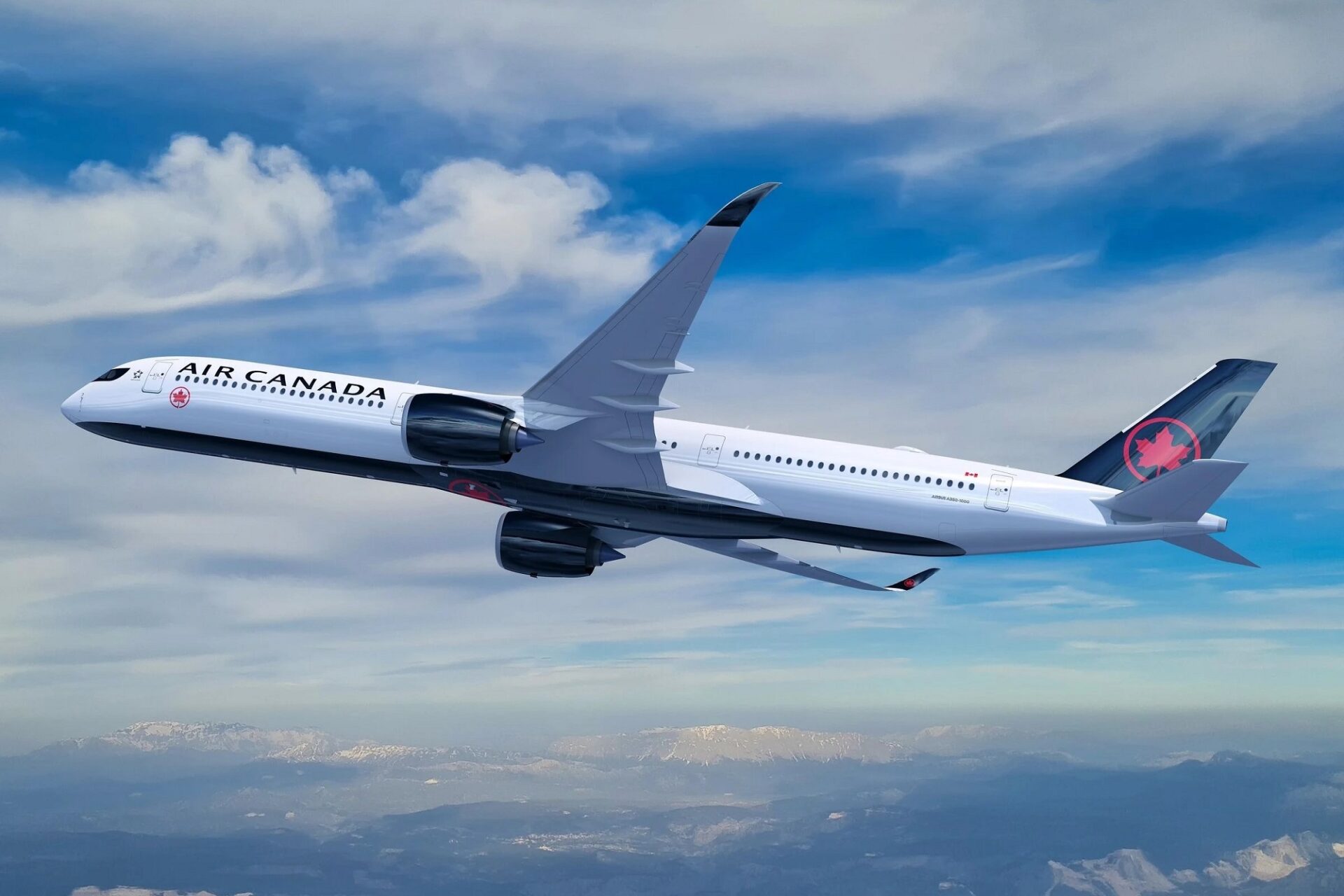
Air Canada Airbus A350-1000

Air Canada announced on March 30, 2026, that President and CEO Michael Rousseau will retire by the end of the third quarter of 2026, after nearly two decades with the carrier. Rousseau, who joined as Chief Financial Officer, advanced to Deputy CEO and succeeded Calin Rovinescu as President and CEO in February 2021, will remain in his role and on the board until a successor assumes the position.

During his tenure, Air Canada navigated the 2007-2008 financial crisis and the COVID-19 pandemic. Key achievements include repatriating the Aeroplan loyalty program in-house and restoring solvency to its pension plans, bolstering the airline’s financial position.

The board’s succession planning, ongoing for over two years, features an internal development program for senior executives and an external global search launched in January 2026. Candidates will be evaluated on skills, experience, and French language proficiency, given the airline’s Montreal headquarters.

Board chair Vagn Sorensen highlighted Rousseau’s leadership in strengthening finances and advancing customer and employee initiatives. Rousseau noted his roles chairing the Star Alliance CEO board and serving on the International Air Transport Association board as career highlights. He has agreed to assist with a seamless transition.

AAR Corp Q3 FY2026 Earnings: 25% Sales Growth to $845M, Return to Profit

AAR Corp reported third-quarter fiscal year 2026 results for the period ended February 28, 2026, posting consolidated sales of $845.1 million, up 25% from $678.2 million in the prior-year quarter. Sales to commercial customers rose 27% or $130 million to represent 73% of total sales, fueled by double-digit organic growth in new parts distribution and contributions from HAECO Americas and ADI acquisitions. Government sales increased 19%, driven by higher volumes and ADI’s government business.

The company swung to net income of $68.0 million, or $1.71 GAAP diluted EPS, from a $8.9 million net loss last year that included a $63.7 million pre-tax charge on the Landing Gear Overhaul divestiture. Adjusted diluted EPS climbed 26% to $1.25 from $0.99. Adjusted EBITDA reached $102.1 million, up 26%, with margin expanding to 12.1% from 12.0%.

GAAP operating margin fell to 7.8% from 10.5%, while adjusted operating margin improved to 10.2% from 9.7%, reflecting strength in higher-margin new parts distribution. Selling, general and administrative expenses rose to $89.8 million from $61.3 million, impacted by a prior-year $11.1 million legal charge reversal and higher acquisition costs of $8.7 million. Net interest expense edged down to $17.1 million from $18.1 million, with diluted shares at 39.5 million versus 35.4 million.

Cash flow from operations totaled $74.7 million, versus an $18.7 million outflow last year. Net debt stood at $816.5 million, with net leverage at 2.17x.

Hactl Rolls Out World’s First 100% Closed-Loop Recycled Plastic Sheets for Air Cargo Operations

Hong Kong Air Cargo Terminals Limited (Hactl), Hong Kong’s largest independent cargo handler, has become the first air cargo terminal worldwide to introduce 100% closed-loop recycled plastic sheets for cargo operations. Developed in partnership with the Nano and Advanced Materials Institute (NAMI), these sheets utilize post-consumer plastic waste generated from Hactl’s own operations and are now being rolled out immediately.

Since 2022, Hactl has used plastic sheets containing 30-50% recycled material, progressively advancing toward a fully recycled solution. The new sheets eliminate virgin plastic entirely, reducing non-biodegradable waste destined for landfills and providing a scalable model for the air cargo industry.

Amy Lam, Hactl’s chief sustainability officer, stated: “Our existing plastic sheets already contained 30-50% recycled material, but we wanted to accelerate our full transition to the circular economy and bring tangible benefits to industry and society at large, and the new 100% closed-loop recycled plastic sheets enable us to achieve that goal.”

Lam added: “We believe there is huge scope to improve the air cargo industry’s performance in this area. By incorporating a higher proportion of recycled content into our plastic sheets, we can achieve closed-loop recycling, significantly reduce the carbon footprint of our industry and keep thousands of tonnes of non-biodegradable plastic out of our landfills.”

Operating SuperTerminal 1 with a 3.5 million-ton annual capacity, Hactl holds certifications including ISAGO, WHO GDP, and all four IATA CEIV standards, positioning it to influence pallet wrapping materials across the supply chain.

Five Key Aviation Rivalries Shaping Modern Industry Competition

Aviation blends collaboration and fierce competition, with major players vying for efficiency and market share. AeroTime highlights five prominent rivalries driving innovation.

Airbus vs. Boeing Duopoly. Boeing and Airbus dominate large jet production. Airbus overtook Boeing in deliveries; in 2025, the A320 family surpassed the 737 as history’s most delivered jet. From 2015-2024, Airbus secured 8,950 orders and delivered 7,043 aircraft, versus Boeing’s 5,012 orders and 5,312 deliveries. Disputes center on subsidies and state aid.

Ryanair’s Michael O’Leary vs. Rivals. Ryanair CEO O’Leary targets competitors like Wizz Air, calling its All You Can Fly program a “marketing scam.” He has criticized British Airways, Lufthansa, easyJet, and others. Wizz Air CCO Ian Malin stated, “we have an incredible amount of respect for Ryanair and so have they for us.”

United vs. Delta vs. American Airlines. The U.S. big three compete on routes, pricing, and loyalty. American staff attacked their CEO in January 2026, citing Delta and United’s lead. American and United clashed over Chicago O’Hare schedules this year.

Emirates vs. Etihad vs. Qatar Airways. Gulf carriers compete as long-haul hubs. Emirates leads, with a decade’s head start on Qatar and over 20 years on Etihad. They vie on price and service amid regional tensions.

eVTOL Developers. Archer Aviation sued Vertical Aerospace in February 2026 for patent infringement and Joby Aviation in March 2026 over China ties. Joby countersued Archer in November 2025 for trade secret theft. Vertical CEO Stuart Simpson called for collaboration: “if we work together, we can bring this to life.”

London Luton Airport Completes £18M Runway Resurfacing Project

London Luton Airport (LTN) has finalized a £18 million runway resurfacing project, upgrading the 2.16 km runway’s durability and performance to meet regulatory safety standards.

The five-month effort, executed by a 120-person team from Lagan Aviation and Infrastructure, involved nighttime operations from 00:01 to 05:45, Monday to Friday, minimizing disruptions to daytime flights. Over 30,000 tonnes of polymer-modified asphalt were applied after milling the existing surface, ensuring 25 years of extended life. This marks the airport’s largest airfield program in two decades, following the previous resurfacing in 2006.

Coordination with airfield operations, air traffic control, health and safety, motor transport, technical engineering, and security teams facilitated over 120 nightly plant vehicles. The project incorporated a taxiway extension, replacement of more than 1,000 halogen runway lights with energy-efficient LEDs, and installation of a new weather sensor for improved forecasting accuracy.

Marc Wolman, infrastructure director at London Luton Airport, stated: “The resurfacing of the London Luton Airport runway was an immense, once in a generation project – the airport’s largest airfield engineering programme in two decades.” He added: “A complex project of this scale will always present operational challenges and we are delighted to have delivered this critical piece of infrastructure safely, on time, on budget and with minimal impact on airfield operations or our neighbouring communities.”

Works commenced planning 18 months prior, with execution starting November 3, 2025, concluding ahead of schedule.

Finnair Leases Two Embraer E190-E1 and Two ATR-72-600 Aircraft for Norra Regional Fleet Expansion

Finnair has signed Letters of Intent to lease two Embraer E190-E1 regional jets and two ATR-72-600 turboprops for its regional subsidiary Norra. The aircraft will integrate into Norra’s fleet by summer and early autumn 2026, supporting short-haul operations from Helsinki.

Norra currently flies 12 Embraer E190-E1s and 12 ATR-72-500s. Finnair intends to expand Norra’s jet count to 18, enhancing capacity on domestic Finnish routes, Baltic Sea crossings, and Scandinavian services. The E190-E1 suits high-frequency regional links with its 100-seat configuration, quick turnarounds, and single-aisle cabin. The ATR-72-600 excels on sub-500 km sectors, short runways, and Nordic winter conditions.

This leasing follows Finnair’s March 23, 2026, agreement with Embraer for up to 46 E195-E2s, including options for 16 more and 12 purchase rights. Finnair CEO Turkka Kuusisto called it “one of the largest investments in Finnair’s 102-year-old history, and a vital step in our strategy.” A Pratt & Whitney contract covers PW1900G GTF engines for the E2 series, with spare engines and maintenance. Finnair also plans to acquire up to 12 used A320/321ceos to phase out older A319s and A320s.

“An extensive regional network plays an important role as we seek to grow our network from our key markets,” said Christine Rovelli, Finnair Chief Revenue Officer. “These aircraft will further strengthen our schedule reliability and add to the flexibility of our fleet deployment.”

ANA Holdings Joins Japanese Consortium for Satellite CO2 Emissions Tracking from Space

ANA Holdings has joined a consortium led by Axelspace, selected by the Japan Aerospace Exploration Agency (JAXA) Space Strategy Fund to develop technology for source-specific CO2 emission and uptake monitoring via satellite constellations and aircraft observations. Partners include Meisei Electric and JIJ.

The project targets miniaturization and cost reduction of spectrometers to enable compact sensors for satellites, aircraft, and ground stations. These will provide high-frequency, high-resolution data on CO2 by source sector, time, and location, focusing on urban areas with multi-point observations at different times of day.

ANA Holdings will utilize its commercial flight network for real-world sensor testing and validation, combining aircraft data with satellite observations. The airline has prior experience collaborating with JAXA on airborne remote sensing, including the GOBLEU Project adapting Ibuki satellite technology for commercial jets.

“We are honored to participate in what will be the world’s first greenhouse gas observation project integrating a satellite constellation, scheduled commercial flights, and a ground-based network,” said Masashi Hamade, Director of Business Strategy at ANA Holdings.

A demonstration satellite launch is planned between fiscal 2030 and 2032, following aircraft validation tests. JIJ will apply quantum computing for data processing in complex environments. Additional participants include Kagawa University, MUFG Bank, Tokio Marine & Nichido Fire Insurance, and the Universities Space Research Association. Japan pioneered dedicated greenhouse gas satellites with Ibuki.

“Climate change represents one of the most urgent challenges facing humanity,” said Yuya Nakamura, CEO of Axelspace. “To drive effective action by governments and businesses alike, objective and transparent monitoring of greenhouse gas emissions—by specific sources—is essential.”

RAF Regiment Gunners Become First Drone Aces Shooting Down Iranian Drones in Middle East Operations

Four RAF Regiment gunners have achieved ‘ace’ status for the first time in history by shooting down five or more Iranian drones during operations in the Middle East. This milestone protects British interests, partners, and personnel amid persistent threats.

The ‘ace’ designation mirrors the World War II standard for pilots who downed five or more enemy aircraft. RAF personnel, supported by engineers and air surveillance officers, counter one-way attack drones targeting UK and allied assets since late February 2026.

On March 23 and 24, gunners in a ground-based counter-drone unit recorded the most effective single-night defense to date. Systems like the stationary RapidSentry and Lightweight Multirole Missiles, made by Thales UK in Belfast, proved capable in these engagements.

Minister for the Armed Forces Al Carns MP stated: “Our teams across the Middle East are operating in some of the most demanding conditions imaginable, and they are delivering with professionalism, courage and real combat skill. I am hugely proud of our RAF Regiment.”

One gunner noted: “We are all RAF Gunners—some as young as 18, many of us with over five confirmed engagements, and some just eight months out of training.” These actions align with UK policy to defend its people and interests without entering the wider conflict.

Richard Maughan highlighted: “During the 23rd and 24th of March, RAF Regiment gunners… delivered the most effective defensive outcome achieved in a single night to date.” The achievements mark a shift in air defense, with ground operators now central to countering drone swarms in high-threat environments.